Meta Ray-Ban Display
I helped create the UX for the first mass-market smart glasses with a display built in — a category with no existing patterns to borrow from. No screen to hold, no input to type, every assumption rebuilt from scratch. It shipped in September 2025 to demand that outpaced supply, and the patterns we built now shape Meta's next wave of wearables.
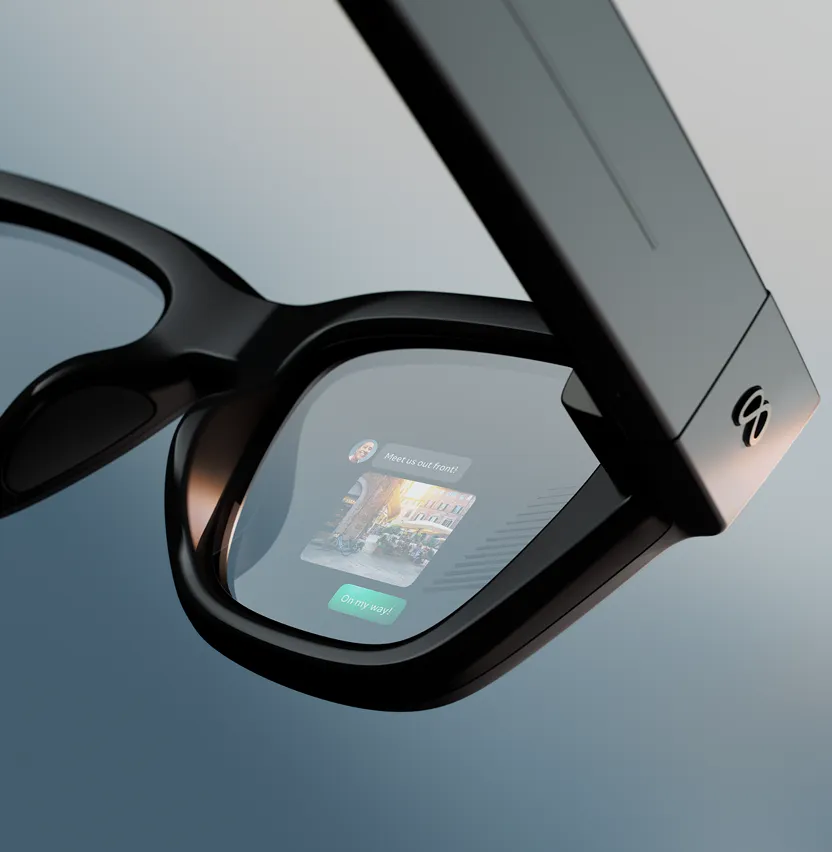
The problem
Smart glasses with an integrated display didn’t have a design language yet. Every existing pattern — from phone UI to smartwatch UI — assumes a screen the user can hold, look directly at, and dismiss. A display worn on the face breaks all three assumptions. We needed interaction patterns for information that’s glanceable but not intrusive, input that works hands-free, and an experience that doesn’t make the wearer look checked out of the room around them.
The process
I contributed to design work at the intersection of hardware, ML, and software constraints that don’t usually collide this directly in product design. Early exploration centered on a few core questions: How much information is too much for a display this small and this close to the eye? How do voice, gesture (via the Meta Neural Band), and glance-based cues combine without competing for attention? And critically — how do you design a screen that respects the social space around the wearer, so the people they’re talking to don’t feel like they’re being recorded or ignored?
That last question shaped a lot of the interaction philosophy: defaulting to minimal, momentary UI rather than persistent overlays, and treating “putting information away” as seriously as surfacing it.